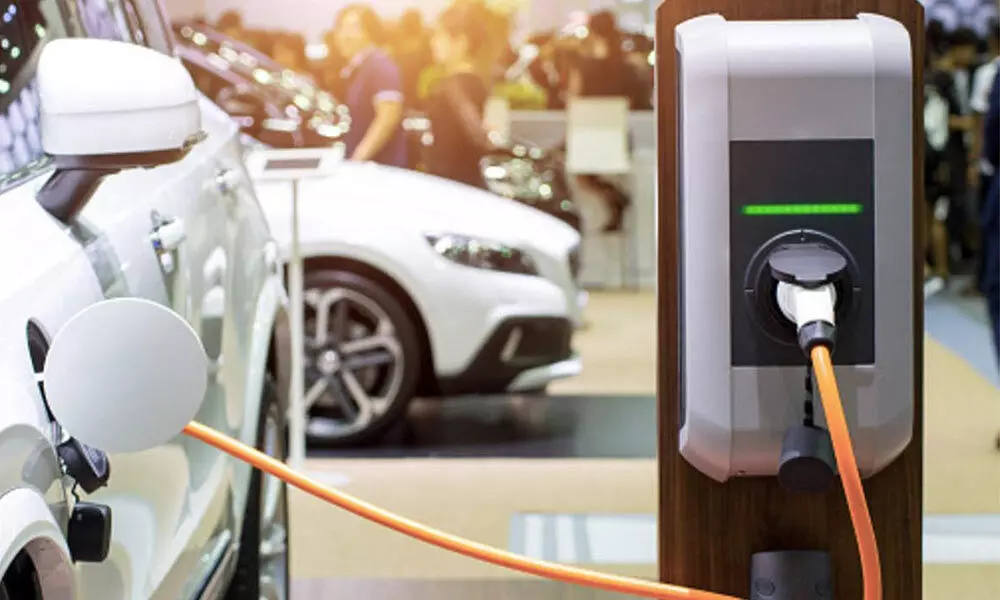
Electric vehicles are becoming increasingly popular across Thane, Mumbai and Navi Mumbai. As more residents purchase electric cars and two-wheelers, housing societies are facing an important question: How many EV chargers can our building safely support?
Installing EV charging points in apartment parking areas is not simply about selecting chargers and providing electrical connections. Every housing society must first understand its existing electrical capacity, current electricity consumption, available sanctioned load and future charging requirements.
Without proper planning, installing multiple EV chargers can put additional pressure on the building’s electrical infrastructure. It may also require electrical upgrades, load enhancement or a revised electricity connection arrangement.
This is where EV charging load calculation for housing societies becomes important.
In this guide, we explain how to calculate EV charging requirements, what factors determine the number of chargers a building can support, and how housing societies in Thane, Mumbai and Navi Mumbai can plan their EV charging infrastructure.
What Is EV Charging Load Calculation?
EV charging load calculation is the process of estimating how much electrical power a building needs to operate its electric vehicle charging points safely alongside its existing electricity requirements.
The calculation considers the electrical capacity required by EV chargers and compares it with the capacity available in the building’s existing electrical infrastructure.
For housing societies, this assessment generally includes:
- Number of existing EV owners.
- Expected number of future EV users.
- Power rating of each EV charger.
- Number of chargers that may operate simultaneously.
- Existing residential and common-area electricity demand.
- Available sanctioned electrical load.
- Transformer and distribution panel capacity.
- Cable capacity and electrical protection arrangements.
- Possibility of future EV charging expansion.
A proper EV load assessment helps determine whether the building can accommodate additional charging points or requires electrical infrastructure improvements.
Why Housing Societies Should Calculate EV Charging Load Before Installation
Many residential societies initially plan to install one or two EV charging points. However, as more residents purchase electric vehicles, the charging demand can increase significantly.
Installing chargers without considering the building’s total electrical capacity may create avoidable infrastructure problems.
Here are some important reasons why load calculation should be completed before installation.
1. Prevent Electrical Overloading
Every building has a certain electrical capacity based on its sanctioned load and installed electrical infrastructure.
When multiple EV chargers operate simultaneously, they add to the building’s existing electricity demand.
If the total demand exceeds the capacity of electrical equipment or circuits, it can cause overheating, protective-device tripping and other electrical problems.
Proper load calculation helps identify potential capacity limitations before installation.
2. Determine How Many EV Chargers Can Be Installed
A society may have 5, 10 or even 30 residents interested in EV charging. However, the number of residents requesting chargers does not automatically determine how many can operate simultaneously.
For example, a building may have sufficient capacity for five chargers operating together but may require load management or electrical upgrades to support fifteen chargers.
A professional assessment helps identify a suitable installation arrangement.
3. Avoid Unnecessary Infrastructure Expenses
Installing additional electrical panels, upgrading cables or enhancing the sanctioned load can involve significant expenses.
Without an initial electrical assessment, a society may invest in equipment that does not match its actual requirements.
A proper EV charging load calculation helps identify the infrastructure that genuinely needs improvement.
4. Plan for Future EV Adoption
EV ownership is likely to increase as more residents shift from petrol and diesel vehicles to electric mobility.
Instead of planning only for current EV owners, housing societies should consider future demand.
For example, a building with 8 EV owners today may have 20 or more residents interested in charging facilities over the next few years.
Future-ready planning can help reduce repeated electrical modifications.
How to Calculate EV Charging Load for a Housing Society
The basic calculation begins with identifying the power rating of each EV charger and estimating how many chargers may operate simultaneously.
The connected EV charging load can be calculated using:
Total Connected EV Load = Number of EV Chargers × Power Rating of Each Charger
For example:
If a housing society plans to install 10 EV chargers, each rated at 7.4 kW:
10 × 7.4 kW = 74 kW
Therefore, the total connected EV charging load is 74 kW.
However, this does not necessarily mean the building will always draw 74 kW from EV charging.
Actual demand depends on how many chargers operate at the same time, their charging power settings and whether an intelligent load management system is installed.
Example: EV Charging Load Calculation for 10 Chargers
Consider a residential building in Thane with the following requirements:
| Parameter | Example |
| Total EV chargers planned | 10 |
| Individual charger rating | 7.4 kW |
| Total connected EV load | 74 kW |
| Chargers operating simultaneously | 5 |
| Estimated simultaneous EV demand | 37 kW |
In this example, if five chargers operate simultaneously at their full 7.4 kW rating, the EV charging demand will be:
5 × 7.4 kW = 37 kW
This is an illustrative calculation, not an approved capacity recommendation for a real building.
The actual demand assessment must also consider the building’s existing electrical load, operating conditions, charger settings and infrastructure limitations.
Important Factors That Determine How Many EV Chargers Your Building Can Support
Calculating the total charger load is only the first step. Several other technical factors determine whether a housing society can safely support multiple EV charging points.
1. Existing Sanctioned Electrical Load
The sanctioned load is the electrical capacity approved for a consumer’s electricity connection.
Before installing EV chargers, the society should review its existing electricity connection details and understand how much capacity is available for additional demand.
If the proposed EV charging requirement exceeds the approved load, the society may need to explore an appropriate load enhancement or separate connection arrangement.
2. Transformer Capacity
In larger residential buildings, transformer capacity is an important consideration.
A transformer supplies electricity to the building’s electrical distribution system. Its available capacity depends on its rating and the existing demand placed on it.
For example, a building may have several EV charging requests, but the transformer may already be operating close to its practical capacity during peak hours.
A professional electrical assessment should examine the transformer’s loading conditions before additional EV charging infrastructure is approved.
3. Main Distribution Panel Capacity
The main electrical distribution panel distributes power throughout the building.
Before adding EV charging connections, the following should be assessed:
- Main incomer capacity.
- Busbar rating.
- Distribution board capacity.
- Available outgoing feeders.
- Protective device ratings.
- Existing electrical loading.
- Space for additional electrical equipment.
Even when the overall building connection appears to have sufficient capacity, individual distribution panels may require modifications.
4. Cable Size and Cable Routing
EV chargers require appropriately rated electrical cables based on their load, installation method, cable length and operating conditions.
For apartment parking installations, cable routes can be particularly important because charging points may be located in basement or stilt parking areas.
Cable selection should consider:
- Charger power rating.
- Cable length.
- Current carrying capacity.
- Voltage drop.
- Installation environment.
- Grouping of cables.
- Ambient temperature.
- Applicable electrical standards.
Using unsuitable cables can create overheating and electrical safety risks.
5. Simultaneous Charging Demand
Not every EV owner will necessarily charge their vehicle at the same time.
Some residents may charge overnight, while others may use their vehicles during different periods.
A society can use this information to estimate realistic charging demand.
However, the assessment should not rely only on assumptions about residents’ charging habits. The electrical design must account for the maximum demand that the system is expected to handle safely.
6. Single-Phase and Three-Phase Electrical Supply
Different EV chargers have different electrical supply requirements.
Depending on the charger rating, manufacturer specifications and installation conditions, a charger may require single-phase or three-phase supply.
The electrical consultant should evaluate:
- Available supply configuration.
- Charger compatibility.
- Phase-wise electrical loading.
- Voltage conditions.
- Electrical protection requirements.
Proper phase distribution is important when multiple chargers are installed within the same building.
Can a Housing Society Install Multiple EV Chargers Without Increasing Its Electrical Load?
In some situations, a housing society may be able to support additional EV chargers without immediately increasing its sanctioned load.
This depends on the existing electrical capacity and the way EV charging demand is managed.
One possible solution is an EV load management system.
A load management system monitors electricity consumption and controls how much power is allocated to different charging points.
For example:
A society has 10 EV chargers, each rated at 7.4 kW. If all chargers operate at full capacity simultaneously, the connected EV load is 74 kW.
However, the society may have a lower electrical capacity available for EV charging.
A suitable load management system can dynamically distribute available power among connected chargers, reducing the likelihood of exceeding the designed EV charging capacity.
Benefits of Smart EV Load Management
- Helps manage simultaneous charging demand.
- Distributes available power across multiple chargers.
- Supports additional charging points within a planned capacity.
- Helps reduce unnecessary electrical infrastructure upgrades.
- Allows charging infrastructure to expand more systematically.
- Provides better visibility into charging operations.
It is important to understand that load management does not create additional electrical capacity. The overall system must still be designed within the safe operating limits of the building’s electrical infrastructure.
Dedicated EV Meter vs Existing Society Electricity Connection
Another important consideration is the electricity metering arrangement.
Housing societies may need to evaluate whether EV charging should be supplied through an existing electricity connection or a separate dedicated EV connection.
The appropriate arrangement depends on the society’s requirements, applicable electricity distribution company provisions, approved load and billing preferences.
| Factor | Existing Connection | Separate EV Connection |
| Installation arrangement | May use existing infrastructure if suitable | Requires a separate approved connection |
| Electricity measurement | Depends on existing metering arrangement | Dedicated EV consumption measurement |
| Additional load | Must be assessed | Assessed for the proposed connection |
| Billing management | May require sub-metering or another arrangement | Can provide separate utility billing |
| Suitability | Depends on available capacity and requirements | Worth evaluating for dedicated charging infrastructure |
A separate EV meter is not automatically required for every residential charger. The society should first assess its electrical requirements and verify the applicable arrangements with its electricity distribution company.
You can also read our guide on Home Meter vs Separate EV Meter: Which Is Better for EV Charging in Mumbai & Thane?.
Common Mistakes Housing Societies Should Avoid
Poor planning can make EV charging installation more expensive and complicated.
Here are some common mistakes societies should avoid.
1. Installing Chargers Without Load Assessment
Installing multiple EV chargers without understanding available electrical capacity can create avoidable problems.
Always complete a building-level electrical load assessment before finalizing the number of charging points.
2. Ignoring Future EV Requirements
Planning only for existing EV owners can lead to repeated infrastructure upgrades.
Consider expected EV adoption over the next few years when designing the charging system.
3. Using Undersized Electrical Cables
Cable selection should be based on electrical calculations and installation conditions, not simply on the charger’s advertised power rating.
4. Ignoring Electrical Protection and Earthing
Proper circuit protection, earthing, isolation and other required safety arrangements are essential for EV charging installations.
5. Not Planning Electricity Billing
Housing societies should decide how electricity consumption will be measured and charged to individual EV owners.
Suitable metering and billing arrangements can help avoid disputes between residents.
6. Installing Chargers Without Professional Coordination
EV charging infrastructure involves electrical design, parking arrangements, utility requirements and society coordination.
A coordinated installation plan helps ensure that these requirements are considered before work begins.
Step-by-Step EV Charging Infrastructure Planning for Housing Societies
For a residential building in Thane, Mumbai or Navi Mumbai, the following approach can help organize an EV charging project.
Step 1: Identify EV Charging Requirements
Prepare a list of existing EV owners and residents who may require charging facilities in the future.
Step 2: Conduct an Electrical Site Survey
Inspect the building’s electrical infrastructure, including distribution panels, transformer arrangements, available feeders and parking locations.
Step 3: Calculate the Total EV Charging Load
Determine the connected load based on charger ratings and assess expected simultaneous demand.
Step 4: Evaluate Available Electrical Capacity
Compare the proposed charging demand with existing building consumption and available electrical capacity.
Step 5: Plan Load Management
Evaluate whether a load management system can help distribute available power across multiple charging points.
Step 6: Finalize the Metering and Connection Arrangement
Assess whether existing electricity connections, load enhancement or a separate EV connection is suitable under applicable utility requirements.
Step 7: Complete Electrical Installation and Testing
Install appropriate cables, protective devices, earthing and charging equipment. Complete the required testing and commissioning before using the system.
Why Choose Galvanic Engineers for EV Charging Load Assessment in Thane & Mumbai?
Planning EV charging infrastructure for a housing society requires more than installing individual chargers. It requires understanding the building’s electrical capacity, charging demand, metering requirements and future expansion possibilities.
Galvanic Engineers provides electrical contracting, EV charging and electrical consultancy solutions for residential and commercial requirements across Thane, Mumbai and Navi Mumbai.
Our services include:
- EV charging infrastructure planning.
- Electrical load assessment and consultancy.
- EV meter installation assistance.
- Society and apartment EV charging solutions.
- New electricity connection assistance.
- Electrical load enhancement support.
- Electrical installation and utility coordination.
Whether your housing society is planning its first EV charging point or considering multiple charging stations, proper electrical planning can help establish a more organized and scalable charging infrastructure.
Learn more about our EV Charging Station Installation Services in Thane & Mumbai.
You can also explore our guide to How Housing Societies in Thane Can Install EV Charging Stations Legally.
Contact Galvanic Engineers to discuss your housing society’s EV charging requirements and electrical infrastructure planning.
Frequently Asked Questions (FAQs)
1. How many EV chargers can a housing society install?
There is no fixed number of EV chargers suitable for every housing society. It depends on the available electrical capacity, charger ratings, existing building demand, simultaneous charging requirements and distribution infrastructure.
2. How much electrical load does a 7.4 kW EV charger require?
A 7.4 kW charger has a rated charging power of 7.4 kilowatts. The actual electrical current and supply requirements depend on the charger’s specifications, voltage, power factor and operating conditions.
3. Can a housing society install 10 EV chargers?
Yes, a housing society can plan for 10 EV chargers, provided its electrical infrastructure and approved connection arrangement can support the required demand. Load assessment and appropriate infrastructure planning are essential.
4. Does EV charging require a separate electricity meter?
Not in every situation. The need for a separate EV meter depends on the existing electricity connection, available sanctioned load, applicable utility provisions and billing requirements.
5. What is an EV load management system?
An EV load management system monitors and distributes available electrical power across multiple EV chargers. It helps manage simultaneous charging demand within the capacity of the designed electrical system.
6. Can EV chargers overload a housing society’s transformer?
They can add significant electrical demand if the charging infrastructure is not properly planned. A transformer loading assessment should be completed to determine whether sufficient capacity is available.
7. Is electrical load enhancement required for EV charger installation?
Not always. It depends on the existing sanctioned load, available infrastructure and proposed charging demand. If additional capacity is required, the society may need to explore load enhancement or another suitable connection arrangement.
8. Who provides EV charging load assessment in Thane and Mumbai?
A qualified electrical consultant or contractor can assess the building’s electrical infrastructure, calculate charging requirements and help plan the appropriate installation and connection arrangement. Galvanic Engineers provides EV charging and electrical consultancy solutions in Thane, Mumbai and Navi Mumbai.
Conclusion
As electric vehicle ownership continues to grow, housing societies need to prepare their electrical infrastructure for increasing charging demand.
Before deciding how many EV chargers to install, societies should understand their existing electrical capacity, calculate the proposed EV charging load, evaluate simultaneous charging demand and plan for future expansion.
A properly designed EV charging system can support residents’ charging requirements while helping maintain electrical safety and efficient building operations.
For professional guidance on EV Charging Load Calculation for Housing Societies in Thane, Mumbai and Navi Mumbai, connect with Galvanic Engineers and plan your building’s EV charging infrastructure with the right electrical assessment.