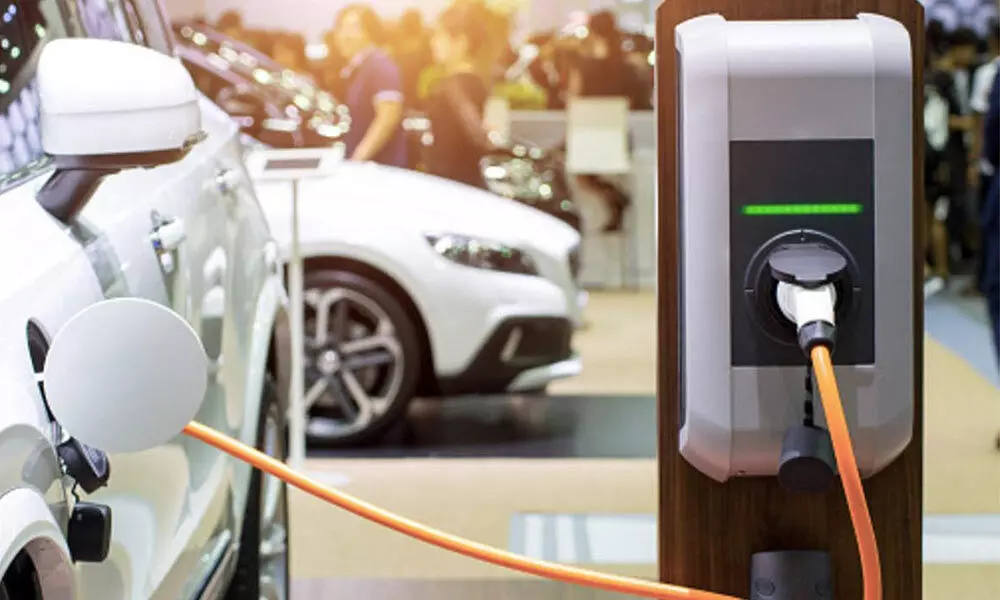
Electric vehicles are changing the way people commute across Mumbai, Thane and Navi Mumbai. As more employees, customers, residents and visitors switch to electric cars, commercial properties are increasingly exploring EV charging facilities in their parking areas.
For offices, shopping malls, hotels, hospitals, business parks, restaurants and commercial complexes, installing EV charging stations can be a valuable addition to their property infrastructure. It can improve convenience for visitors, support employees who drive electric vehicles and help businesses prepare for the growing demand for electric mobility.
However, EV Charging Station Installation in Commercial Parking Lots requires more than purchasing chargers and installing them near parking spaces. Property owners must consider electrical load capacity, charger selection, parking layout, power supply arrangements, safety requirements, metering, utility coordination and future expansion.
If you are planning to install EV charging stations at a commercial property in Mumbai or Thane, understanding these requirements before starting the project can help avoid unnecessary expenses and technical complications.
In this guide, Galvanic Engineers explains how to install EV charging stations in commercial parking lots, the infrastructure required, important electrical considerations and the steps involved in planning a reliable EV charging setup.
Why Commercial Properties in Mumbai & Thane Need EV Charging Stations
Commercial properties are important locations for expanding EV charging infrastructure because vehicles often remain parked for extended periods while people work, shop, attend appointments or stay at hotels.
Installing EV chargers can provide several benefits to property owners and visitors.
1. Improve Convenience for Customers and Visitors
Shopping malls, hotels, hospitals and commercial complexes receive visitors throughout the day.
Providing EV charging facilities allows electric vehicle owners to charge their vehicles while using the property’s services.
This can make a commercial property more convenient and attractive to EV users.
2. Support Employees with Electric Vehicles
Corporate offices and business parks can provide charging facilities for employees who commute using electric cars.
Workplace charging is particularly useful when vehicles remain parked for several hours during working hours.
3. Prepare Commercial Buildings for Future Demand
As electric vehicle adoption increases, the demand for accessible charging infrastructure is also expected to grow.
Planning EV charging facilities during a building’s electrical infrastructure upgrade or renovation can help reduce the need for repeated modifications later.
4. Create Additional Business Opportunities
Commercial parking operators and property owners may explore revenue opportunities through EV charging services.
Depending on the business model, charging facilities may generate income through charging fees, parking packages or partnerships with EV charging network operators.
The actual commercial viability depends on electricity costs, utilisation, equipment investment, operating expenses and applicable regulations.
5. Strengthen Sustainability Initiatives
EV charging infrastructure can support a commercial property’s broader sustainability objectives.
Businesses investing in energy-efficient systems, renewable energy and EV charging facilities can demonstrate their commitment to cleaner mobility.
Which Commercial Properties Can Install EV Charging Stations?
EV charging infrastructure can be planned for different types of commercial parking facilities.
| Commercial Property | EV Charging Application |
|---|---|
| Corporate Offices | Employee and visitor EV charging |
| Shopping Malls | Customer parking EV charging stations |
| Hotels & Resorts | Guest EV charging facilities |
| Hospitals | Visitor and staff EV charging |
| Business Parks | Workplace charging infrastructure |
| Commercial Complexes | Shared EV charging facilities |
| Restaurants & Cafes | Customer parking charging points |
| Fuel Stations | Dedicated public EV charging facilities |
| Warehouses | Charging for electric commercial vehicles |
| Logistics Facilities | Fleet charging infrastructure |
The number and type of chargers required will depend on parking capacity, expected vehicle demand, electrical infrastructure and the property’s operating requirements.
Step 1: Conduct a Commercial Parking Site Survey
The first step in installing EV charging stations is to evaluate the available parking area and existing electrical infrastructure.
A site survey helps identify suitable charging locations and determine the practical requirements of the installation.
Important Site Survey Considerations
Available parking spaces: Identify how many parking bays can accommodate EV charging points without disturbing regular parking operations.
Vehicle movement: Ensure that charging equipment and parked vehicles do not obstruct entry, exit or vehicle circulation.
Electrical panel location: Identify the nearest suitable electrical distribution panel to minimise unnecessary cable routing.
Cable routing: Examine the distance between the power source and charging locations, along with cable trays, conduits and other installation requirements.
Parking environment: Check whether the charging area is indoors, outdoors, underground or exposed to weather conditions.
Safety and accessibility: Evaluate equipment placement, protection against vehicle impact, signage and access for maintenance.
A properly planned parking layout can reduce installation complexity and make the charging facility easier to operate.
Step 2: Calculate the Electrical Load Required for EV Charging
Electrical load assessment is one of the most important parts of commercial EV charging installation.
Before installing chargers, the property’s existing electrical capacity must be evaluated to determine whether it can support the additional charging demand.
The assessment should consider:
- Existing sanctioned electrical load.
- Current building electricity consumption.
- Available electrical capacity.
- Number of proposed EV chargers.
- Individual charger power ratings.
- Expected simultaneous charging demand.
- Transformer and distribution panel capacity.
- Cable and feeder ratings.
- Future charging requirements.
Example of EV Charging Load Calculation
Suppose a commercial building in Mumbai plans to install 10 EV charging points.
Assume each charger has a rated power of 7.4 kW.
| Parameter | Example |
|---|---|
| Total EV chargers | 10 |
| Individual charger capacity | 7.4 kW |
| Total connected EV load | 74 kW |
| Chargers operating simultaneously | 5 |
| Simultaneous EV charging demand | 37 kW |
The connected EV load is calculated as:
10 × 7.4 kW = 74 kW
If only five chargers operate simultaneously at their full rated power, the corresponding EV charging demand is:
5 × 7.4 kW = 37 kW
This is an illustrative example. It does not mean that every commercial building needs 74 kW of additional sanctioned load or that five chargers can automatically operate safely.
The final electrical design must account for the property’s existing demand, approved load, equipment characteristics, power factor where applicable, supply arrangements and electrical infrastructure limitations.
What If the Existing Electrical Load Is Insufficient?
If the existing sanctioned load cannot support the proposed charging requirements, the property owner may need to evaluate:
- Electrical load enhancement.
- A separate EV electricity connection.
- Additional distribution infrastructure.
- Transformer capacity augmentation, where required.
- Smart EV load management.
- Changes to the charging installation plan.
The appropriate arrangement should be evaluated with the relevant electricity distribution company.
For commercial buildings in Mumbai and Thane, this assessment may involve coordination with the applicable utility, such as Adani Electricity, Tata Power, BEST or MSEDCL, depending on the property’s location.
Step 3: Select the Right EV Charger for Your Commercial Parking Lot
Choosing the correct charger is important because different commercial properties have different charging requirements.
The selection depends on parking duration, vehicle type, power availability, expected utilisation and investment budget.
The two broad categories commonly considered for commercial parking are AC chargers and DC fast chargers.
AC EV Chargers
AC chargers are generally suitable for locations where vehicles remain parked for several hours.
Common applications include:
- Corporate offices.
- Hotels.
- Residential-commercial complexes.
- Shopping malls with longer visitor parking durations.
- Employee parking facilities.
AC chargers are often suitable for overnight or workplace charging, depending on charger rating and vehicle compatibility.
DC Fast Chargers
DC fast chargers provide higher charging power and are generally considered for locations where faster vehicle turnaround is important.
Typical applications include:
- Public charging hubs.
- Fuel stations.
- Highway facilities.
- Fleet charging locations.
- Commercial parking facilities with short vehicle stays.
DC fast charging installations generally require more detailed electrical and infrastructure planning.
AC vs DC EV Chargers: Which Is Better for Commercial Parking?
| Comparison | AC EV Charger | DC Fast Charger |
|---|---|---|
| Charging approach | AC supply converted by the vehicle’s onboard charger | DC supplied directly to the vehicle battery system |
| Typical application | Workplace, hotel and long-duration parking | Public charging hubs and high-turnover locations |
| Infrastructure | Depends on charger rating and supply requirements | Often requires more substantial electrical infrastructure |
| Installation cost | Generally lower for comparable smaller-capacity installations | Generally higher |
| Parking duration | Better suited to longer stays | Better suited to shorter charging stops |
| Space planning | Can be wall-mounted or pedestal-mounted | Usually requires dedicated equipment space |
| Best suited for | Offices, hotels and commercial buildings | Fuel stations, fleet facilities and public charging hubs |
The actual charging speed depends on the vehicle’s maximum charging capability, battery condition, charger specifications and available electrical power.
A DC fast charger will not necessarily charge every vehicle at its maximum rated output.
Step 4: Plan the EV Charging Parking Layout
The charging area should be designed to provide convenient access while maintaining safe vehicle movement.
A commercial EV charging layout should consider:
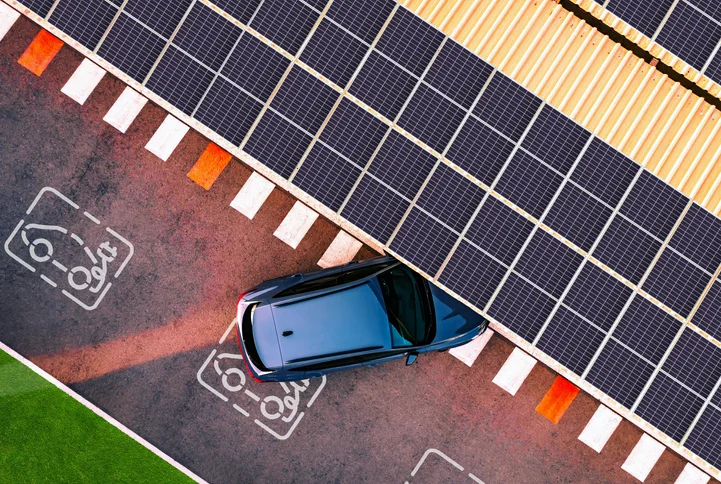
Dedicated EV Parking Bays
Clearly identify parking spaces reserved for electric vehicle charging.
Provide appropriate markings and signage so EV users can easily locate the charging facilities.
Charger Positioning
Chargers may be installed on walls or dedicated pedestals depending on the parking arrangement and equipment specifications.
Position charging units so that charging cables can reach the vehicle inlet without creating unnecessary obstruction.
Vehicle Movement and Accessibility
Maintain adequate space for vehicles to enter, park, connect charging cables and exit safely.
Avoid placing charging equipment where it could obstruct pedestrian movement or emergency access.
Cable Protection
Cables and electrical equipment should be installed with suitable mechanical protection.
In basement parking areas, cable trays, conduits and appropriate protective arrangements should be considered.
Weather and Physical Protection
Outdoor installations should use equipment with suitable environmental protection ratings.
Charging units should also be protected against accidental vehicle impact, unauthorised access and potential vandalism.
NITI Aayog’s EV handbook provides practical guidance on parking layout, signage, vehicle circulation, charger placement and electrical infrastructure planning. https://www.niti.gov.in/node/341
Step 5: Arrange the Required Electrical Infrastructure
Once the charger selection and parking layout are finalised, the next step is planning the electrical infrastructure.
A commercial EV charging installation may require several electrical components.
1. Electrical Distribution Panel
The distribution panel supplies electricity to the EV charging equipment.
Its capacity, busbar rating, incomer protection, outgoing feeders and available space must be checked before adding new charging circuits.
2. Dedicated Electrical Circuits
EV chargers should be supplied through appropriately designed circuits with suitable protective devices.
The electrical design should follow charger manufacturer requirements and applicable electrical safety standards.
3. Electrical Cables and Cable Trays
Cable selection should consider:
- Charger power rating.
- Current carrying capacity.
- Cable length.
- Voltage drop.
- Installation environment.
- Cable grouping.
- Ambient temperature.
- Mechanical protection.
Correct cable sizing is important to avoid overheating and other electrical problems.
4. Earthing and Protection Systems
EV charging equipment requires appropriate earthing and electrical protection.
The installation should include protection against relevant electrical faults, overload and short circuits.
The protection arrangement must be selected according to the equipment specifications and applicable regulations.
5. Transformer and Power Supply Capacity
Larger commercial installations may require additional assessment of transformer capacity and upstream electrical infrastructure.
An additional transformer is not automatically necessary for every commercial EV charging installation.
Its requirement depends on the total proposed load, available supply capacity and utility assessment.
6. Smart Load Management System
For commercial parking facilities with multiple chargers, a smart load management system can help distribute available electrical power across charging points.
For example, if a building has 10 chargers but limited capacity available for EV charging, the system can manage charging output according to the available power.
This can help:
- Control simultaneous charging demand.
- Reduce unnecessary electrical overload risks.
- Distribute available capacity across multiple vehicles.
- Support planned expansion.
- Monitor charging activity.
Load management does not increase the building’s physical or approved electrical capacity. The system must operate within the limits of the designed electrical installation.
Step 6: Understand Electricity Connection and Approval Requirements
Before installing commercial EV charging stations, property owners should evaluate the applicable electricity connection and approval requirements.
The process depends on the type of property, charging capacity, existing electricity connection and distribution company.
Some important considerations include:
Existing Electricity Connection
If the commercial property already has sufficient approved electrical capacity and suitable infrastructure, it may be possible to plan the EV chargers around the existing connection, subject to applicable requirements.
Separate EV Electricity Connection
A separate electricity connection may be considered where dedicated metering, billing or supply arrangements are required or appropriate.
Electrical Load Enhancement
If the proposed charging demand exceeds the existing approved load, an application for additional sanctioned load may be necessary.
Building and Property Permissions
For leased properties, shared parking areas and commercial complexes, the owner or authorised building management should verify the relevant permissions and responsibilities before proceeding.
Distribution Company Coordination
The relevant electricity distribution company should be consulted for the applicable connection category, load requirements, technical conditions, metering arrangements and approval process.
India’s Ministry of Power issued the Guidelines for Installation and Operation of Electric Vehicle Charging Infrastructure, 2024. These guidelines cover charging infrastructure in privately owned parking, office buildings, hospitals, group housing societies and commercial complexes, among other locations.
The latest applicable provisions and utility requirements should be checked before executing a project. https://neca.beeindia.gov.in/show_content.php?lang=1&level=1&lid=35&ls_id=36
Step 7: Follow Electrical Safety Requirements
Safety should be a priority throughout the EV charging installation.
Commercial parking facilities may serve several vehicles and users, so electrical equipment must be installed and maintained appropriately.
Important safety considerations include:
Overload protection: Provide suitable protection against excessive current on the input and output sides as required by the applicable standards.
Short-circuit protection: Install correctly rated protective devices for the electrical circuits.
Earthing: Ensure appropriate earthing and protective arrangements.
Residual current protection: Provide the required residual current protection according to the applicable regulations and charger specifications.
Cable management: Avoid loose cables, damaged insulation and exposed electrical connections.
Fire safety: Evaluate the charging area and electrical installation in accordance with applicable fire and building safety requirements.
Emergency isolation: Provide suitable isolation arrangements and make emergency procedures clear to authorised personnel.
Inspection and testing: Complete required electrical testing and verification before putting the chargers into operation.
The Central Electricity Authority’s safety regulations contain specific requirements for EV charging stations, including protection against overload and other electrical safety provisions. https://indiacode.ecourtsindia.com/rules/central-electricity-authority-measures-relating-to-safety-and-electric-4856ff62/
Step 8: Complete Installation, Testing and Commissioning
After the electrical infrastructure and charger locations are finalised, the installation can proceed.
A typical commercial EV charging installation involves:
- Marking the approved EV charging parking locations.
- Preparing the required electrical routes and mounting arrangements.
- Installing electrical panels, feeders and protective devices.
- Laying and terminating appropriately rated cables.
- Installing and connecting the EV chargers.
- Completing earthing and electrical protection arrangements.
- Checking the communication and monitoring systems, where applicable.
- Carrying out electrical testing and commissioning.
- Providing operating instructions and relevant documentation.
Before the charging facility is opened for use, the installation should be checked by qualified electrical professionals and the required utility or statutory formalities should be completed.
Documents and Information Required for Commercial EV Charging Installation
The documents required depend on the property, connection type, utility and project scope.
The following checklist can help commercial property owners prepare.
| Document or Information | Purpose |
|---|---|
| Latest electricity bill | Verify the existing electricity connection |
| Consumer number | Identify the existing utility account |
| Existing sanctioned load details | Understand approved electrical capacity |
| Property ownership or occupancy documents | Establish property details and applicant authority |
| Owner or building management NOC | Where required for shared or leased premises |
| Company registration documents | Where the applicant is a business entity |
| Authorisation letter or board resolution | Authorise the person applying on behalf of the company |
| Proposed EV charger specifications | Identify charger type, rating and quantity |
| Electrical load calculation | Estimate the additional electrical requirement |
| Electrical single-line diagram | Explain the proposed electrical distribution arrangement |
| Site layout and parking plan | Identify charging bay locations and cable routes |
| Electrical test reports | Where required for the installation and approval process |
This is a general preparation checklist, not a universal mandatory list. The relevant distribution company and authorities may request additional documents.
What Is the Cost of Installing EV Charging Stations in Commercial Parking Lots?
The cost of installing EV charging stations depends on several technical and commercial factors.
There is no single installation price suitable for every commercial parking facility.
The main cost components include:
| Cost Component | Factors Affecting Cost |
|---|---|
| EV Charger Equipment | AC or DC charger, power rating, brand and features |
| Electrical Panels | Existing panel capacity and required modifications |
| Electrical Cabling | Cable size, length, routing and installation method |
| Civil Work | Trenching, drilling, foundations and mounting |
| Transformer or Supply Upgrades | Additional capacity requirements, if necessary |
| Protection and Earthing | Required protective equipment and installation |
| Load Management | Smart charging and power distribution systems |
| Metering | Dedicated or shared metering arrangement |
| Signage and Parking Markings | EV bay identification and safety instructions |
| Testing and Commissioning | Installation verification and required testing |
Factors That Can Increase Installation Costs
- Long distance between the power source and parking area.
- Higher-power DC charging equipment.
- Insufficient existing electrical capacity.
- Additional transformer or distribution infrastructure.
- Underground parking cable routing.
- Complex civil work.
- Multiple charging points.
- Advanced monitoring and payment systems.
The best way to estimate the project cost is to conduct a site survey and prepare a technical proposal based on the actual parking and electrical requirements.
Common Mistakes to Avoid During Commercial EV Charger Installation
Commercial property owners should avoid the following mistakes when planning EV charging infrastructure.
1. Selecting Chargers Without Load Assessment
Choosing chargers before checking electrical capacity can result in additional infrastructure expenses or an unsuitable installation plan.
2. Installing Too Many Chargers at Once
Installing more charging points than the available electrical infrastructure can support may create unnecessary costs.
A phased installation approach can be considered when it aligns with expected demand and the approved electrical design.
3. Ignoring Future Expansion
A charging system designed only for immediate requirements may need substantial modification when more customers or employees begin using EVs.
4. Choosing the Wrong Charger Type
Installing DC fast chargers at a location where vehicles remain parked for several hours may not always be commercially or technically justified.
Charger selection should match actual parking behaviour and charging demand.
5. Ignoring Electrical Safety
Improper cabling, inadequate protection, unsuitable earthing and poor equipment placement can create electrical hazards.
6. Not Planning Electricity Billing
Commercial property owners should decide how charging consumption will be measured and billed.
Depending on the operating model, this may involve dedicated metering, charging software or an arrangement with a charging network operator.
7. Not Planning Maintenance
EV chargers require periodic inspection, testing and maintenance.
Commercial properties should establish a maintenance process to help keep charging equipment operational and safe.
How Galvanic Engineers Helps with Commercial EV Charging Station Installation in Mumbai & Thane
Planning commercial EV charging infrastructure requires coordination between electrical assessment, charger selection, parking layout, power supply requirements and installation.
Galvanic Engineers provides electrical contracting, EV charging installation and electrical consultancy solutions for residential and commercial properties across Mumbai, Thane and Navi Mumbai.
Our commercial EV charging services include:
- Commercial EV Charging Station Installation.
- EV Charging Infrastructure Planning.
- Electrical Load Assessment.
- EV Meter Installation Assistance.
- Dedicated EV Electricity Connection Planning.
- Electrical Load Enhancement Support.
- Electrical Panel and Distribution Planning.
- Electrical Liaisoning and Utility Coordination.
- EV Charging Solutions for Offices and Commercial Buildings.
- EV Charging Infrastructure for Parking Facilities.
Whether you manage an office building, hotel, shopping mall, business park, commercial complex or parking facility, our team can help assess your requirements and plan a suitable EV charging installation.
We also provide other electrical solutions, including new electricity connections, load changes, rooftop solar panel installation and electrical consultancy.
Explore our EV Charging Station Installation Services in Thane & Mumbai to learn more.
For commercial electricity connection and technical support, you can also explore our Electrical Consultancy Services.
Planning to install EV charging stations in your commercial parking lot? Contact Galvanic Engineers to discuss your site requirements and arrange a suitable electrical assessment.
Frequently Asked Questions (FAQs)
1. How do I install an EV charging station in a commercial parking lot?
Start with a parking site survey and electrical load assessment. Select suitable AC or DC chargers, plan the parking layout, evaluate the electricity connection, arrange required permissions and electrical infrastructure, and complete installation, testing and commissioning.
2. Can shopping malls install EV charging stations in Mumbai?
Yes. Shopping malls can plan EV charging infrastructure in their parking facilities, subject to applicable electrical safety, connection, building and utility requirements.
3. How many EV chargers can a commercial building install?
There is no fixed number for every commercial property. The number depends on available electrical capacity, charger power ratings, expected simultaneous demand, parking layout and infrastructure requirements.
4. Do commercial EV charging stations require a separate electricity meter?
Not necessarily in every case. The appropriate metering arrangement depends on the existing connection, sanctioned load, charging business model and applicable electricity distribution company requirements.
5. What is the difference between AC and DC EV chargers?
AC chargers are generally suitable for longer parking durations, such as workplaces and hotels. DC fast chargers are designed for faster charging and are commonly considered for public charging hubs and locations with shorter vehicle stays.
6. Is electrical load enhancement required for commercial EV charger installation?
It may be required if the existing sanctioned load and electrical infrastructure cannot support the proposed EV charging demand. A professional electrical load assessment should be conducted before applying for additional capacity.
7. Can multiple EV chargers operate simultaneously in a commercial parking lot?
Yes, provided the electrical installation is designed to support the simultaneous demand. Smart load management can distribute available capacity among multiple chargers within the system’s designed limits.
8. What safety measures are required for commercial EV charging stations?
Important measures include appropriate overload and short-circuit protection, earthing, residual current protection, suitable cabling, equipment protection, fire safety considerations and electrical testing according to applicable regulations.
9. How much does commercial EV charging station installation cost in Mumbai?
The cost depends on charger capacity, charger quantity, cabling, electrical panel modifications, civil work, metering, power supply upgrades and other project-specific requirements. A site assessment is recommended for an accurate quotation.
10. Which company provides commercial EV charging installation in Mumbai and Thane?
Galvanic Engineers provides EV charging installation, electrical load assessment, meter installation assistance and electrical consultancy for commercial and residential requirements across Mumbai, Thane and Navi Mumbai.
Conclusion
Installing EV charging stations in commercial parking lots is an important step towards preparing commercial properties for the growing adoption of electric vehicles.
However, successful installation requires proper planning, starting with a site survey and electrical load assessment. Property owners should select suitable AC or DC chargers, evaluate existing electrical infrastructure, plan parking arrangements, understand applicable electricity connection requirements and complete the necessary safety checks.
A well-designed EV charging facility can improve convenience for customers and employees while supporting the property’s long-term infrastructure and sustainability goals.
If you are planning EV Charging Station Installation in Mumbai, Thane or Navi Mumbai, connect with Galvanic Engineers for electrical consultancy, load assessment and commercial EV charging infrastructure solutions.
Galvanic Engineers – Electrical Contractors, Solar Panel Installation & EV Charging Solutions.